
6063-T5 vs T6 aluminium: the real difference, and why pergola blades matter
T6 is genuinely stronger. T5 is the strong-enough, more stable, more cost-efficient choice for standard pergolas — while premium, heavy-duty and retractable series are exactly where T6 earns its keep.
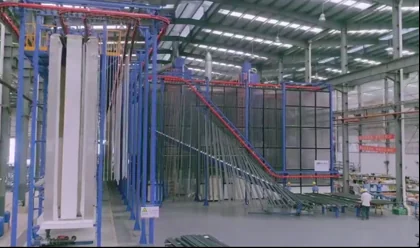
When you read the spec sheet for an outdoor louvreed pergola, it almost always says "6063-T5." But in the same breath, suppliers talk about "T6 being harder and stronger." So what's the actual difference? Is T6 simply better? And why do experienced pergola makers still build most of their blades in T5?
This guide answers all three in plain terms. The short version up front: T6 is genuinely stronger, but T5 is the "strong enough + more stable + more cost-efficient" choice for standard pergolas — while premium, heavy-duty, and retractable series are exactly where T6 earns its keep.
What "6063-T5" actually means
"6063-T5" is two pieces of information packed into one code:
- 6063 is the alloy — it describes the chemistry. It's an Al-Mg-Si (6xxx-series) alloy with roughly 0.45–0.9% magnesium and 0.2–0.6% silicon, hardened by the precipitation of Mg₂Si (magnesium silicide). 6063 is the workhorse of architectural aluminium: it extrudes beautifully, anodizes and powder-coats to a clean finish, and resists corrosion — exactly what an outdoor product that has to look good and hold up needs.
- T5 / T6 is the temper — it describes the heat treatment, not the chemistry. Temper changes the internal microstructure, which in turn changes strength, hardness, and toughness.
So "6063-T5" = 6063 chemistry + T5 heat treatment. T5 and T6 have identical composition. What separates them is how the metal was heat-treated.
T5 vs T6: the core difference at a glance
One line: the difference is whether — and how — the metal is quenched.
| Factor | 6063-T5 | 6063-T6 |
|---|---|---|
| Full designation | Cooled from elevated-temperature forming + artificially aged | Solution heat-treated + artificially aged |
| Key step | Air-cooled / forced-air-cooled straight from the extrusion press, then aged | Re-heated to solution temperature + rapid water quench, then aged |
| Tensile strength (typical) | ≈ 185 MPa | ≈ 240 MPa |
| Tensile strength (min., GB/T 5237.1) | ≥ 160 MPa | ≥ 205 MPa |
| Yield strength Rp0.2 (min.) | ≥ 110 MPa | ≥ 180 MPa |
| Elongation | ≥ 8% | ≥ 8% |
| Hardness (Webster, reference) | ≈ 8 HW | ≈ 11–12 HW |
| Cost | Lower | Higher |
| Dimensional stability | Better | Quench can leave distortion |
Note: "Typical" values are common industry ranges; "min." values come from GB/T 5237.1 (the Chinese standard for architectural aluminium profiles). Always defer to the supplier's mill certificate for a specific batch.
Memory hook: T5 is "cool it down from the press, then age it." T6 is "re-heat it, water-quench it, then age it." That extra solution-treat + quench is what makes T6 stronger — and also more expensive and more prone to distortion.
Why the difference exists: the heat-treatment path
Aluminium alloys like 6063 get strong through precipitation hardening, and the whole game is played in how you move the metal from hot to cold:
- The strengthening phase (Mg₂Si) only fully dissolves into the aluminium matrix at high temperature.
- As the metal cools, Mg₂Si precipitates back out as fine particles. Those finely dispersed particles are what actually carry the strength — the finer and more uniform, the stronger.
The two tempers simply take different routes:
- T5 path — the profile exits the extrusion press already at roughly 500°C. It's allowed to cool naturally (or with forced air) and then goes into an aging furnace (≈175°C for several hours) to stabilize a uniform precipitate. T5 skips re-solutionizing and water quenching, leaning on the extrusion's own residual heat.
- T6 path — the profile is extruded, cooled to room temperature, then re-heated to the solution temperature (~520°C) to re-dissolve Mg₂Si, rapidly water-quenched to trap that supersaturated solid solution, and finally aged. Because solutionizing is more complete and quenching more aggressive, aging produces more and finer precipitates — hence the higher strength.
Root cause, in one sentence: T6 adds a controlled solution treatment plus a rapid quench, which yields more complete precipitation and higher strength — at the cost of extra process steps, higher energy use, higher price, and a quench that can twist long, thin profiles.
How to tell T5 from T6
This is where buyers get fooled, because you can't tell them apart by eye or by composition. Here's the practical order:
- Check the mill certificate (most reliable). A proper supplier ships each batch with a mill certificate stating "6063-T5" or "6063-T6" plus measured mechanical properties. Match it to the batch — this is your first line of defense.
- Webster hardness test (non-destructive, most practical). A portable Webster hardness tester clips onto the profile and reads instantly. T5 reads about 8 HW, T6 about 11–12 HW — a clear, field-friendly gap.
- Tensile test (most authoritative, but destructive). Cut a sample and pull it in a lab to get tensile and yield strength directly. Best for spot checks or dispute resolution.
- Ask for the heat-treatment record. T6 must pass through a solution furnace and a quench; T5 does not. A supplier's process card or furnace log reveals whether solutionizing actually happened.
A common myth to avoid: using a spectrometer. Composition analysis only confirms whether it's 6063. Since T5 and T6 are the same chemistry in different tempers, a spectrometer cannot distinguish them. It's the wrong tool for this job.
Why louvreed pergolas use T5 (and why that's a feature, not a flaw)
Louvre blades, beams, and posts on standard pergolas are overwhelmingly 6063-T5. Four reasons, all defensible:
- It's already strong enough. A pergola carries wind load, snow load, and its own weight — a light-to-moderate structural demand, not a heavy load-bearing one. Combined with a well-designed section (the moment of inertia of an extruded shape provides huge stiffness), T5 meets the safety factor requirements comfortably. T6 here is a sledgehammer for a nail.
- Dimensional stability, which matters most on long, thin blades. Pergola louvres are long, thin, wide profiles. T5's gentle air cooling is uniform and produces excellent straightness with minimal twist. T6's water quench can easily warp or corkscrew these shapes and leave residual stress that's hard to straighten out later — hurting assembly precision and consistency.
- Lower cost, no quality sacrifice. Skipping solution-treat + quench shortens the process, cuts energy, and boosts throughput — savings that show up directly in profile price and lead time. For an outdoor product that wins on value and reliable delivery, that's real competitiveness.
- Better, more controllable surface finish. A pergola is a function and decoration product; even anodizing or coating colour is what defines the perceived quality. T5's more uniform surface state and lower residual stress deliver more consistent anodizing/powder-coat colour and adhesion.
The takeaway: a pergola isn't "harder is better." It's "within the strength requirement, what's more stable, more economical, and easier to finish well" — and T5 wins on all four.
When T6 actually makes sense
T6 isn't pointless — it's just for different jobs:
- Heavy load / long-span structural members — large gazebo posts, long beams, anywhere you need extra strength margin.
- Customer-specified T6 — when the spec calls it out, you build to spec.
- Higher wind-resistance requirements on oversized or ultra-wide products.
If you're unsure whether your product needs T5 or T6, the honest answer is to have your supplier run a section load calculation and let the numbers decide — not the marketing line that "T6 is better."
How XIHE uses T6: premium, heavy-duty, and retractable series
The above is the industry logic. Here's how we apply it in our own line: XIHE's Premium, Heavy Duty Luxury, and Retractable series all upgrade their louvre blades to 6063-T6 — not to chase specs, but to put that extra strength exactly where customers feel it.
1. Retractable — blades that move need a strength reserve.
A retractable pergola's louvres open and close repeatedly, cycling load through the blades, pivots, and drive system. T6's yield strength of ≥180 MPa — about 60% higher than T5's ≥110 MPa — means blades resist permanent deformation through thousands of cycles, staying straight, smooth, and sag-free over time. For a product that moves, that's a material requirement, not an option.
2. Heavy Duty Luxury — long spans and high loads make strength a necessity.
Built for wide, open spaces and high wind/snow regions, this series leans on T6's higher tensile and yield strength so blades and beams won't collapse or take a permanent set in extreme weather, with a wider safety margin. (Exact wind/snow ratings are specified per model.)
3. Premium — harder, and it shows.
T6 reads about 11–12 HW on the Webster scale (vs ~8 HW for T5), so surfaces resist scratching and dings and keep their looks over years outdoors. The higher strength also allows a more refined section without giving up capacity — finished with anodizing or powder coating for a cleaner, lighter visual.
In one line: T5 is the safe, "strong enough" choice; T6 is the reinforced choice when the product has to move, span wide, or look flawless. Upgrading our high-end series to T6 is spending cost where customers can genuinely feel it — durability, shape retention, and finish.
Frequently asked questions
What's the difference between 6063-T5 and 6063-T6?
Same alloy, different temper. T5 is cooled from the extrusion temperature and artificially aged; T6 is solution heat-treated, water-quenched, then artificially aged. T6 is stronger and harder, but more expensive and more prone to quench distortion on long profiles.
Can I tell T5 from T6 by appearance or composition?
No. They look identical and have identical chemistry. Use the mill certificate, a Webster hardness test (T5 ≈8 HW, T6 ≈11–12 HW), or a lab tensile test — never a spectrometer.
Is T6 always better than T5?
No. T6 is stronger, but for standard louvreed pergolas T5 is strong enough, more dimensionally stable, cheaper, and finishes better. T6 earns its place in heavy-duty, long-span, and moving (retractable) applications.
Why do most louvreed pergolas use 6063-T5?
Because the loads are moderate, and T5 delivers sufficient strength with better straightness on long blades, lower cost, and more consistent anodizing/coating — the right balance for the product.
Conclusion
The T5–T6 difference is fundamentally a heat-treatment difference: T6 adds a solution treatment plus water quench, gaining strength at the cost of price and — on long thin sections — straightness. T5 is strong enough, more stable, and more economical. For outdoor louvreed pergolas, T5 is the proven default; for premium, heavy-duty, and retractable series, T6 is the deliberate upgrade.
At XIHE, our standard series runs 6063-T5, while our Premium, Heavy Duty Luxury, and Retractable series upgrade to 6063-T6 blades — every profile backed by a per-batch mill certificate and a structurally calculated section, balancing strength, precision, and finish.
Shape the light. Live outside. Want our material and structural specs, or a 6063-T5/T6 mechanical report? Get in touch — we'll send them over.
Request the data sheet
Ask for the per-batch mill certificate and a 6063-T5/T6 mechanical report with your project quote — we'll reply within 24 hours.
Request a Quote WhatsApp +86 15920311263